Wholesale Tshirts for Screen Printing: A B2B Specification Guide
A B2B specification guide to wholesale tshirts for screen printing: fabric, weight, shrinkage, colour lots, construction, sampling sequence, packing and evidence boundaries.
Direct answer: when a buyer orders wholesale tshirts for screen printing, the garment itself is the product being specified, not just the artwork. A bulk order that prints well is controlled by decisions taken before production starts: fabric composition and yarn quality, knit type and fabric weight, surface preparation, dimensional stability after washing, garment colour and dye-lot discipline, body and collar construction, label choice and case packing. Decoration method, ink system and curing profile are then selected against that frozen garment specification and approved on the actual fabric, so the printed result can be reproduced across every lot. Esplandea Incorporation is a knitted-garment manufacturer in Tirupur, Tamil Nadu, producing made-to-order bulk tshirts since 2008, and this guide sets out the decision points a purchasing, print-shop or programme team needs to settle before committing a decorated bulk order.
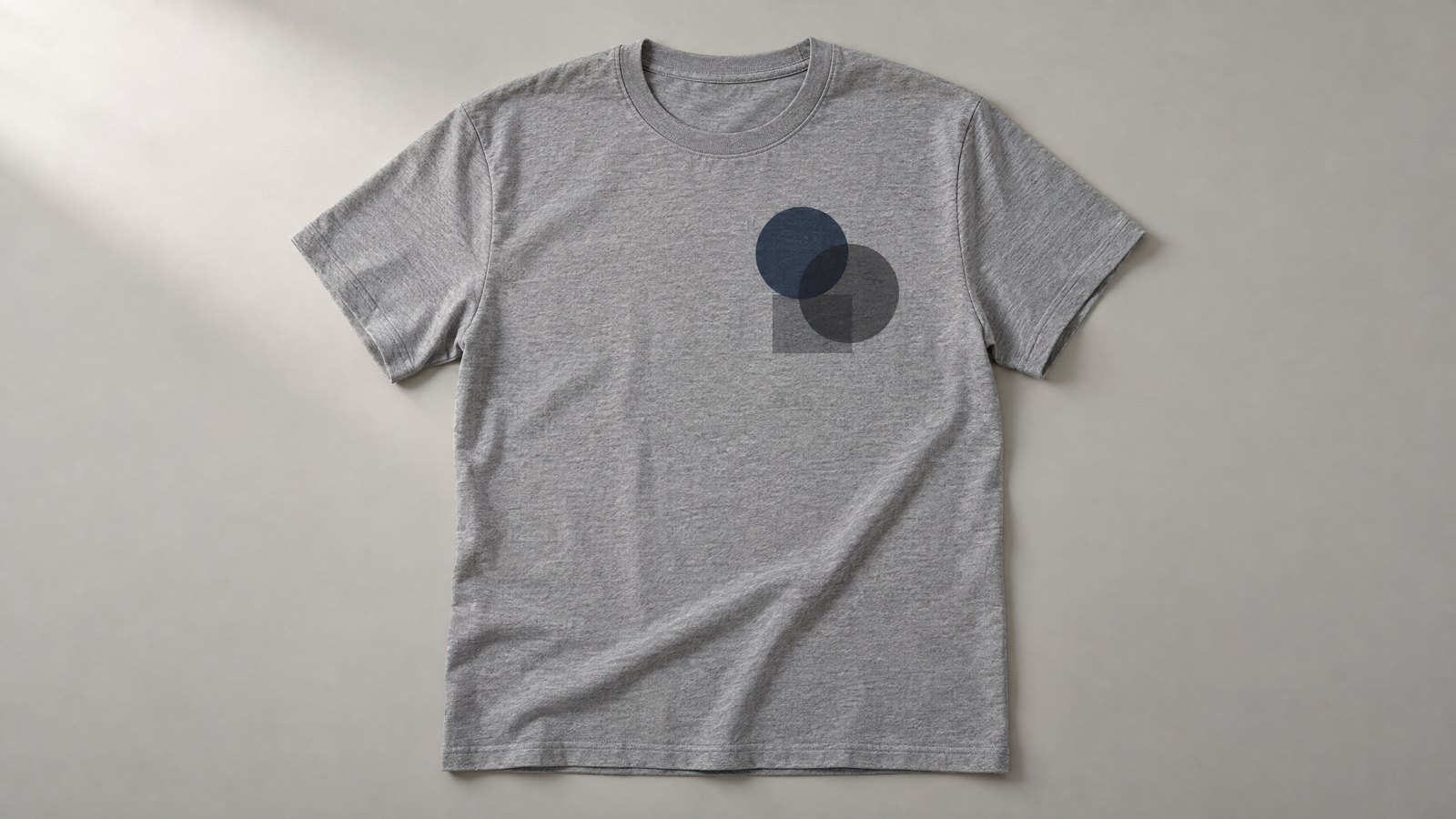
What is actually being bought in a bulk screen-printing order?
Three different procurement shapes sit behind this search phrase, and the specification work differs for each.
- Print shops and decorating businesses buy unprinted garments and apply the decoration in their own facility. They need consistent fabric, predictable shrinkage, a stable colour card and cartons that break neatly into production batches.
- Promotional distributors and programme buyers usually want garment and decoration delivered together, so artwork approval, print testing and packing must be sequenced as one order.
- Brands with in-house decoration buy repeatable blanks across a season and need the base garment to stay unchanged between lots, including the label and the finishing details.
In each case the buyer is purchasing a base garment engineered for decoration. Wholesale buyers sometimes describe the same requirement as blank t-shirts for screen printing, which is a useful way to frame the enquiry: the garment is blank at the point of sewing, but it is not neutral, because every construction choice changes how ink sits, how it cures and how the finished piece behaves after washing. The distinction from a finished decorated order also matters: an undecorated bulk garment is assessed against printability and dimensional stability, while a decorated garment is additionally assessed against approved artwork, placement and colour match.
Esplandea's decoration-programme route covers the base garment, artwork, print method, approval and packing together on one printed tshirt manufacturing page, which is the canonical reference for this category.
Which garment decisions have the greatest effect on print results?
The table below separates the fields that a buyer should state in the enquiry from the reason a decorating floor cares about each one. Nothing here is a claim about a particular finished result; it is the checklist that makes results reproducible.
| Specification field | What the buyer states | Why it matters under screen print |
|---|---|---|
| Fibre composition | Cotton, cotton-rich blend or polyester-containing fabric, with the acceptable range written down | Ink adhesion, cure temperature and hand feel behave differently on cellulosic and synthetic fibres |
| Yarn and knit | Combed or carded yarn, ring-spun or open-end, single jersey or interlock | Finer, more even yarn gives sharper edges on fine linework and lettering |
| Fabric weight | Target GSM band and permitted tolerance | Weight affects opacity over dark bases, ink laydown and how the print feels on the hand |
| Surface preparation | Singe or brushing expectation, acceptable surface pile | Excess fibre on the surface softens detail and can lift into the ink film |
| Dimensional stability | Shrinkage and skew limits after the agreed wash method | Movement after printing shifts registration and can crack a cured film |
| Colour and dye lot | Colour standard, batch reference, acceptable lot variation | Ink colour reads differently on a shifted base, so repeat orders lose visual consistency |
| Body construction | Tubular or side-seamed body, seam type, stitch density | Determines which platen sizes fit and whether a seam interrupts the print area |
| Collar and neck build | Rib height, collar finish, neck tape or no tape | A raised rib or tape blocks placement close to the neckline and affects platen seating |
| Labels and trims | Woven, printed or heat-transfer neck label; care label position | Labels that crush or lift under heat complicate finishing and re-labelling programmes |
| Packing | Carton count per size and colour, polybag format, carton marking | Cartons that sort cleanly into the print schedule reduce handling errors on the floor |
Should a printing programme use tubular or side-seamed bodies?
Tubular garments are made from a circular-knit tube, so the body has no side seam. They are efficient to produce and behave consistently under printing, but the print area near the side of the garment is limited by where the tube ends and the sleeve joins. Side-seamed garments are cut and sewn from open-width fabric, which allows a wider, uninterrupted print panel and more relaxed or fashion-oriented block patterns, at the cost of extra operations.
A practical way to decide is to work backwards from the artwork:
- Mark the intended print width on the size-run grading and check it against the garment's side-seam position.
- Confirm that the platen or arm style used by the decorating team can seat the garment without the seam riding under the print.
- If the design needs a full front panel close to the side seams, specify a side-seamed construction and record it in the tech pack.
- If the design is a compact left-chest or back yoke print, tubular construction is usually simpler and more stable across a large run.
Whichever route is chosen, the decision should be frozen before bulk cutting, because changing body construction after print proofing invalidates the proof.
How should shrinkage, skew and sizing be handled before decoration?
Printed artwork is placed on a garment at one set of dimensions. If the garment then moves, the print moves with it and the visual placement shifts. Buyers who treat dimensional stability as a fabric test rather than a finished-garment test usually get the more reliable number.
- Agree the wash and dry method that will be used for testing, and state it in the specification, because results differ between laundering approaches.
- Record length and width change on the finished garment, not only on a fabric swatch, and keep a measured sample from each production lot.
- Check skew or torque, which shows up as a side seam that walks around the body after washing and is one of the fastest ways to damage the perceived quality of a decorated piece.
- Confirm the size-run grading against the destination market's chart before bulk cutting, since the same label size can sit differently on different body blocks.
- Allow for a size set review at sample stage, where the fit is assessed on the actual printed garment rather than on an undecorated prototype.
These checks are specification conversations, not standard promises. Tolerances that a buyer should accept depend on the fabric, the finishing route and the decoration being applied, so they are agreed per programme and written into the order.
How should sampling and artwork approval be sequenced?
The order of approvals matters as much as their content. A sequence that keeps the garment and the decoration tied together typically runs like this:
- Freeze the base garment specification: composition, knit, weight band, construction, colour standard, label and packing format.
- Supply artwork with placement dimensions, colour count, intended finish and the garment colours it will sit on, rather than a single flat graphic file.
- Select the decoration method against that fabric and colour combination, and confirm the ink system and curing approach with the factory.
- Run a print test on the actual selected fabric, including the underbase or colour-separation decisions the design requires.
- Approve a physical sample that carries the real garment construction, the real colour and the real print, and record what was approved.
- Plan inspection around that approved reference. Esplandea works to AQL 1.5 inspection planning with specification-based checkpoints where these are agreed for the programme.
- Release bulk production only after the approved sample, packing format and destination requirements are all confirmed together.
What to record when approving a sample
A signed-and-dated approval record should capture the garment specification version, the fabric and colour lot used, the print method and ink system, the artwork version and placement measurements, the size and grading reference, and the agreed packing. This is the document that makes a repeat order verifiable, and it is also what protects both sides when a later lot is compared against the original.
How do wholesale tshirts for screen printing differ from finished decorated goods?
Buying the base garment and decorating it later gives a buyer control over print scheduling and reorders, but it shifts the risk of print quality onto the decorating team's own process and equipment. Buying decorated goods transfers that work to the manufacturer, but it front-loads the approval burden: artwork, colour match, placement and packing all have to be signed off before production begins.
Three practical differences are worth planning around:
- Stock position. Made-to-order programmes are produced against the confirmed specification. Buyers should not assume local stock of any colour or size, and should confirm what is being manufactured versus what is available to ship.
- Colour continuity. A repeat order decorated by the buyer only needs to match the garment base colour; a repeat decorated order must match both the base colour and the previously approved print.
- Packing intent. Undecorated cartons are usually sorted for a print schedule, while decorated cartons are usually sorted for distribution, size ratio or point of use. The packing instruction should follow the end use, and should be stated in the enquiry rather than assumed at the end of production.
For buyers evaluating a t-shirt manufacturer with screen printing capability, the useful question is not whether decoration is offered, but whether garment and decoration are approved against one another on the same specification record.
Which manufacturer checks matter before committing a programme?
Verification here is documentary and physical, not adjectival. A buyer's shortlist process normally covers:
- Whether the base garment is knitted, cut, sewn and finished in the same production route, or sourced in from elsewhere, because sourcing in is where lot-to-lot variation usually enters.
- Whether decoration is approved on the actual selected fabric and colour, and what print testing is performed before bulk.
- What quality checkpoints exist during production and how they are recorded against the approved reference.
- Which credential documents exist and what their current scope and validity actually cover. Esplandea's published credentials include OEKO-TEX Standard 100, ISO 9001:2015, and GOTS for applicable organic programmes, alongside a Government of India export authorisation. Buyers should request and verify current certificates directly, because a credential's scope cannot be inferred from a category name.
- What the factory's reported scale actually is. Esplandea reports a 50,000 sq ft facility, more than 250 skilled workers, and monthly capacity above 2,00,000 garments across more than 30 export countries, with operations in Tirupur since 2008. These are company-reported figures; a buyer placing a large programme should still review capacity against their own size split, colour split and delivery pattern.
- Whether export documentation and destination requirements are handled by the same team that produced the goods.
What are the most common failures in decorated bulk orders?
- Selecting the base garment only on hand feel, then discovering the surface cannot hold fine artwork detail.
- Proofing the print on a swatch or on a different colour than the production garment.
- Leaving shrinkage and skew unmeasured, so placement drifts after the first wash cycle.
- Changing dye lots mid-programme without re-checking how the ink colour reads on the new base.
- Approaching garment approval and artwork approval as two separate conversations.
- Assuming a packing format will be decided late, which is where size-ratio and sorting errors appear.
- Treating certificates as background reassurance instead of verifying their current scope, validity and covered products.
Where are the limits of this guidance?
This article is a specification guide. It does not publish rates, order-quantity thresholds, commercial terms or a copyable figure sheet, and it does not commit sample, production or delivery timelines. Quotations and schedules are confirmed only after specification, material, approval, decoration, packing, destination and shipping requirements have been reviewed together. The quotation-factor guide explains which inputs drive a written quotation, and the factory evidence page and credentials page show what a buyer can inspect. Fabric, weight and construction options referenced above are discussed with the factory against the specific programme, because capability varies with the garment being produced.
Frequently asked questions
Can one factory supply both the garment and the printing?
Yes, where the route is set up for it. A decoration programme can be handled as one order, with the base garment specification and the artwork reviewed together, which is how Esplandea's promotional and printed garment routes are structured. Buyers who decorate themselves can instead order the specified base garments and take the print process in-house.
Which fabric weight works for screen-printed bulk tees?
Weight is a trade-off rather than a rule. Lighter fabric is cooler and cheaper to move in volume but can show more of the base colour and softer print edges; heavier fabric gives a fuller hand and more stable surface for detailed artwork. The right band depends on the garment, the destination market's expectations and the design, and should be agreed at specification stage and confirmed on the approved sample.
How is print colour kept consistent across repeat orders?
Through a frozen specification, a controlled colour standard for the base garment, lot records, and a retained approved sample that each new run is compared against. Where a base colour shifts between dye lots, the visual reading of the same ink colour shifts with it, which is why colour discipline belongs to the garment specification rather than to the print file.
Do garments for printing need different packing from finished goods?
Usually. Blanks heading to a decorating floor are packed so cartons break cleanly into production batches by colour and size, while finished decorated goods are packed for distribution, size ratio or event allocation. Stating the packing intent in the enquiry avoids a late change to sorting, polybag format and carton marking.
Planning a screen-printing programme
If the garment and the decoration are approved against one specification record, most of the variation that damages a decorated bulk order disappears before cutting starts. Send the base garment specification together with artwork dimensions, colour count, placement, garment colours, packing intent and destination, so the method selection and the approval steps can be reviewed as one programme.
Esplandea Incorporation can be reached through the quote request page or the official contact page, by email at info@esplandeaincorporation.com or by phone and WhatsApp at +91-9600260878. The factory is at 2/386, A3, Pooluvapatti Ring Road, Green Park, 1st East West Street, Tirupur 641602, Tamil Nadu, India. Buyers comparing garment-only and decoration-included routes can also review the wholesale tshirt manufacturing page and the bulk order guide.
Related buyer resource: Review our bulk and private-label tshirt programme.